

Precise demolition and sustainable building materials: Creating a new era of circular economy
Lily Chang|Dream Journalist by CHEN LI-HUA
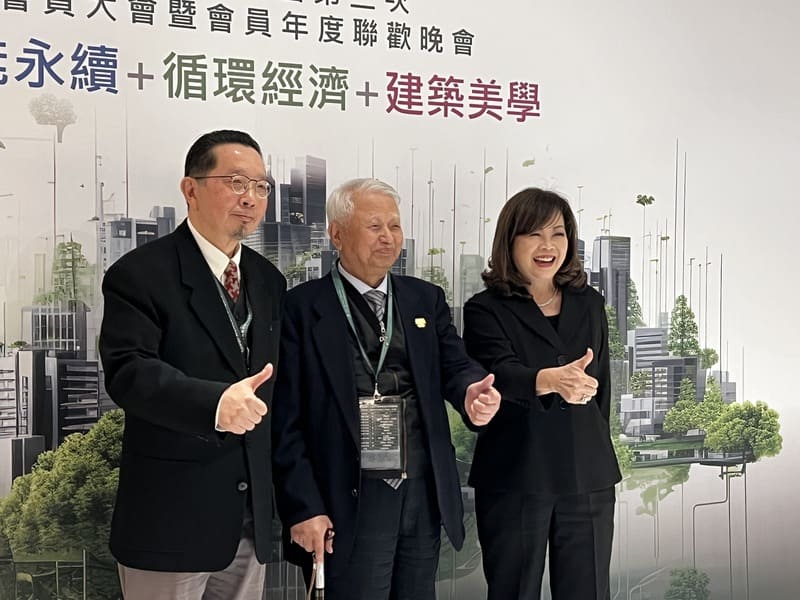
The Taiwan Architectural Aesthetics, Culture and Economy Association held its 2026 Annual General Meeting today (14th), focusing on smart sustainability, circular economy, and architectural aesthetics. In a post-meeting interview, Chairman Liu Pei-Sen offered observations and suggestions regarding the transformation challenges facing Taiwan's construction industry. He pointed out that as international emphasis on sustainable development and resource recycling becomes an industry consensus, Taiwan's construction industry is shifting from a focus on waste disposal to an operational model centered on resource reuse and full life-cycle management. The integrated application of "refined demolition" and "sustainable building materials" is gradually becoming a crucial foundation for building a circular economy.
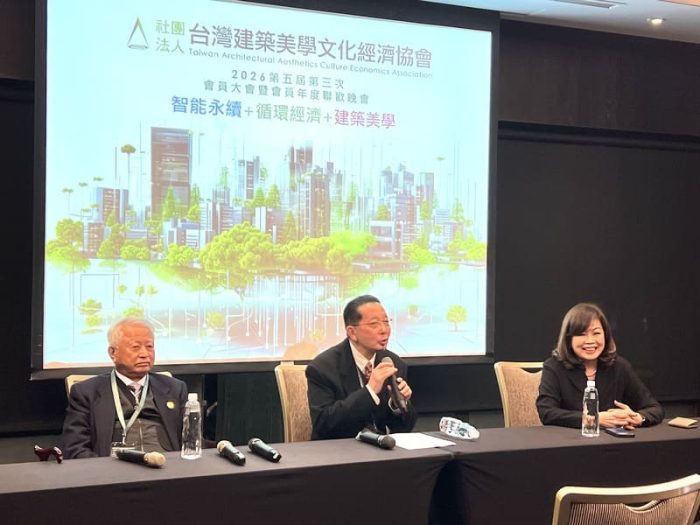
From left to right: Huang Nan-yuan, Founding President of the Taiwan Architectural Aesthetics, Culture and Economy Association; Liu Pei-Sen President; and Chang Lily Honorary President (Photo by Chen Li-Hua)
Refined demolition and source management: reshaping construction processes and resource value
Liu Pei-Sen stated that the key to realizing a circular economy lies in a shift in mindset at the construction front end. In line with the relevant construction guidelines from the Ministry of the Interior's Land Management Administration, industries are gradually adopting a "refined demolition" approach. This involves a systematic dismantling process from the inside out and from top to bottom, completing the classification and management of materials such as glass, metal, wood, and concrete during the demolition phase. Compared to traditional demolition methods, this source management mechanism helps improve the feasibility of subsequent use of recycled materials and reduces the processing and management risks arising from unclear classification.
He further pointed out that meticulous demolition not only helps stabilize the construction process but also reduces the pressure of schedule adjustments caused by problems in waste disposal. Through clear recording and tracking of material flow, operators can meet regulatory requirements while taking into account construction efficiency and resource allocation flexibility, gradually establishing a more resilient construction operation model.
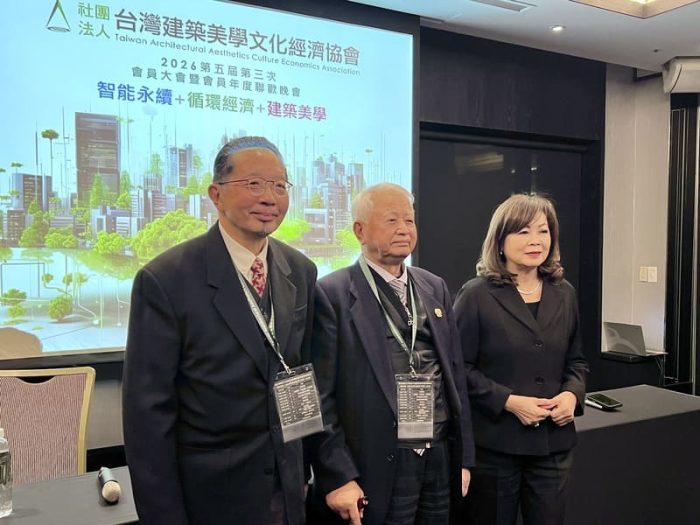
From left to right: Liu Peisen, Chairman of the Taiwan Architectural Aesthetics, Culture and Economy Association; Huang Nanyuan, Founding President; and Chang Lily Honorary President (Photo/Chen Li-Hua)
Integrated Application of Sustainable Building Materials: Constructing a Full Life Cycle Thinking for Buildings
In terms of material application, Liu Pei-Sen pointed out that as technology matures, dismantled concrete and red bricks can be processed into "recycled manufactured sand" and used as a source of building materials, effectively replacing natural sand and gravel and reducing dependence on natural sand and gravel.
In terms of overall building structure planning, the characteristics of diverse green building materials, such as recyclable, healthy, high-efficiency, and ecological materials, can be integrated according to different usage needs, taking into account material utilization efficiency, living quality, and building performance. A comprehensive integration of four major green building material systems is achieved: firstly, "recycled green building materials" increase the utilization rate of recycled materials and reduce environmental damage; secondly, the low-formaldehyde and non-toxic characteristics of "healthy green building materials" ensure living quality; and thirdly, "high-energy green building materials" with energy-saving glass and sound insulation performance are introduced to strengthen the building's outer shell insulation; finally, "ecological green building materials" such as natural wood and bamboo are combined to leverage the carbon sequestration capabilities of these materials.
He stated that by incorporating digital resumes and easily disassembled design concepts, the possibility of future reuse can be included in the early stages of building design, which helps to establish a complete resource recycling path. This planning approach not only responds to the needs of industrial transformation but also gradually shapes architectural thinking that takes into account aesthetics, function, and environmental considerations.
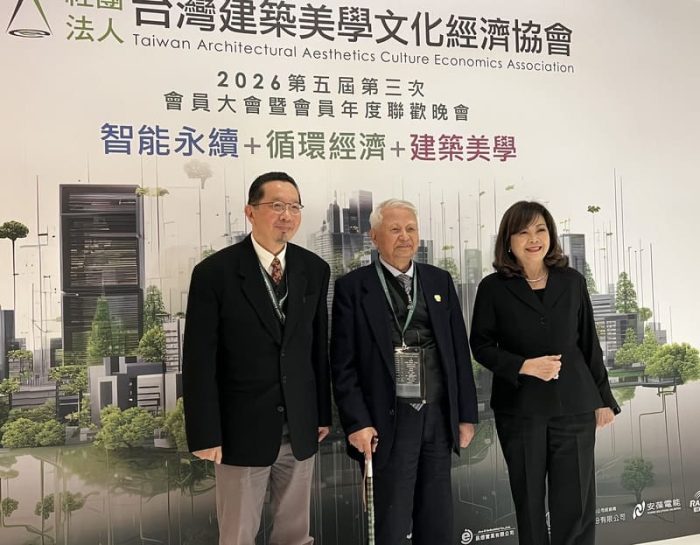
From left to right: Liu Pei-Sen, Chairman of the Taiwan Architectural Aesthetics, Culture and Economy Association; Huang Nanyuan Founding President; and Chang Lily Honorary President (Photo/Chen Li-Hua)
Looking to the future, Liu Pei-Sen believes Taiwan is at a crucial juncture in building a circular economy. This involves not only the evolution of construction techniques and adjustments in material application, but also a collective elevation of architectural aesthetics, green energy and environmental protection, and the aesthetics of life. He emotionally summarizes that true architectural aesthetics, besides being based on humanity, technology, and art to present the truth, goodness, and beauty of space, should also be built upon respect for the land's resources. The Taiwan Architectural Aesthetics, Culture, and Economy Association will continue to promote industry dialogue and experience exchange, assisting design and construction companies in strengthening their resource integration capabilities, moving towards architectural development that coexists with the natural environment, and constructing a new civilization of life aesthetics for society.