

The 76th World Federation of Real Estate Annual Meeting is underway Chang Lily will take over as World President
Lily Chang|Economic Daily by SONG JIAN SHENG
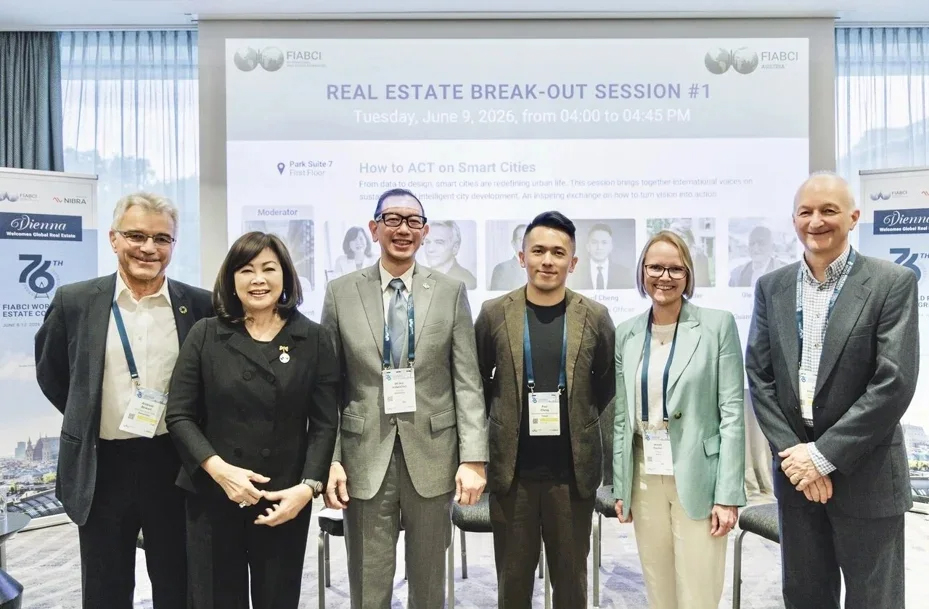
Chang Lily (second from left), who will soon take over as the world president, served as the keynote speaker at the "How to Implement Smart Cities" seminar. Photo/Provided by the industry
The 76th Annual Meeting of the FIABCI (Federation of Real Estate Associations of the World), a major annual event in the global real estate industry, was held in Vienna, the capital of Austria. The biggest highlight of this year's meeting was the official appointment of Chang Lily, Chairperson of the Real Estate Association of the Republic of China and President of Taichung Treasure Dragon Construction, as the World President of the FIABCI on June 12.
The United Nations attached great importance to the event, specifically appointing Ms. Anacláudia Rossbach, Executive Director of the United Nations Human Settlements Programme, to attend and extend her congratulations to Chang Lily. The World Federation of Real Estate is also a special advisory body to the United Nations Economic and Social Council (ECOSOC).
FIABCI, founded in 1951 and headquartered in Paris, France, is the world's most authoritative and largest international organization in the real estate industry, with members in 83 countries worldwide. Chang Lily's appointment as World President not only represents personal international honor but is also seen as a significant achievement culminating in the long-term development of Taiwan's construction and real estate industry. With Chang Lily's inauguration as the new World President, Taiwan's outstanding technological and architectural capabilities have undoubtedly become a crucial piece in the global market's transformation. In the future, Taiwan will lead the global real estate industry to further deepen transnational cooperation and realize its sustainable vision.
This year's annual conference brought together real estate elites from around the world, heads of multinational organizations, and official representatives from various countries to witness this annual grand event in the international real estate industry. The core theme was "ACT," encompassing three aspects: Action, Collaboration, and Transformation. This theme issued a strong appeal to the global real estate community: facing the dual challenges of climate change and housing justice, the global industry, government, and academia cannot remain at the "discussion" stage any longer; they must immediately take concrete, cross-border, and cross-sectoral actions. The conference opened with a performance by the world-renowned Vienna Boys' Choir. The young members' melodious and pure live performance infused this international event with a harmonious vision through perfect musical resonance, officially launching a crucial dialogue that would last for several days.
Facing the turning point of global digitalization and policy transformation, Matthias Gass, President of FIABCI Austria, offered profound reflections on the rapid development of technology and the transformation of social structures. He emphasized that no matter how drastically times and technologies change, humanity's innate "superiority, authentic connection, and creativity" are the ultimate solutions to complex global problems. Antonio Campagnoli, the current World President of FIABCI, pointed out that this year's conference agenda covers diverse fields such as finance, architecture, smart cities, and affordable housing, and participants will exchange global insights.
UN-Habitat Executive Director Anacláudia Rossbach revealed the challenges facing the global living environment from a global macro perspective. She pointed out that the housing issue has fundamentally transformed from a traditional social welfare measure into a "core economic lifeline" affecting the global economy, climate stability, and political landscape. These international trends demonstrate that "affordable housing" and climate-resilient architecture have become a global consensus in the real estate industry and are urgent strategic directions that need to be implemented.
The conference then moved into the core session of the professional forum, where Anacláudia Rossbach, Executive Director of UN-Habitat, revealed the challenges facing the global living environment from a global macro perspective. She pointed out that housing issues have fundamentally transformed from traditional social welfare into a "core economic lifeline" affecting the global economy, climate stability, and political landscape. Beyond the UN's macro-level warnings, another major focus of the forum explored how outstanding architectural design can transcend the framework of visual aesthetics and become a key force driving urban transformation through low-carbon material innovation, comprehensive upgrades in building energy efficiency, and circular economy-oriented urban planning.
In her lecture, Chang Lily shared her insights on building smart cities. She pointed out, "Moving towards net zero is a shared responsibility and direction globally, but there is no one-size-fits-all approach. I come from Taiwan, and a perfect solution in Europe may not be directly applicable to Southeast Asia or Taiwan. This is because there are huge differences in climate conditions, urban density, economic realities, and cultural backgrounds. Therefore, each city needs to develop its own localized model based on its specific circumstances."
Chang Lily stated that the most profound lesson learned from Longbao Construction's long-term experience is that the biggest challenge in transformation has never been technology; the real battle lies in the tug-of-war between short-sighted gains and long-term value. Chang Lily frankly admitted that there's a traditional misconception that sustainable development and green building always mean higher construction costs, which is why industry players often get caught up in overthinking and hesitate to move forward. However, given the legally permissible data and clear ESG goals, many cities actually possess excellent visions.
Chang Lily stated that the global trend of green building transformation aligns perfectly with the Taiwanese construction industry's current efforts to promote carbon reduction in buildings, green building certification, and a high-standard ESG vision. As the incoming world president, she pledged to prioritize global consensus on "net-zero carbon emissions" and "social housing." The FIABCI Global Award for Excellence in Construction will be presented at the magnificent Hofburg Palace in Vienna on the evening of June 11th, followed by the 75th anniversary celebration and the handover ceremony for the outgoing and incoming world presidents on June 12th.
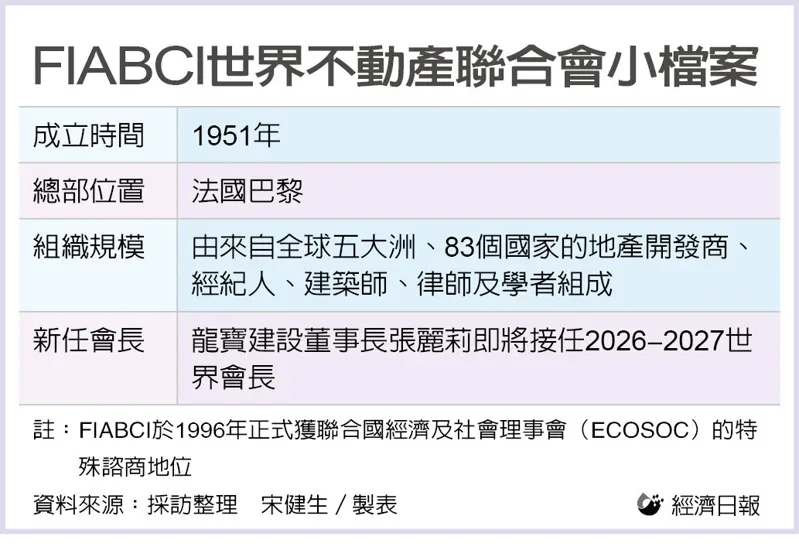
Source: Interview compiled Song Jian-Sheng / Table created
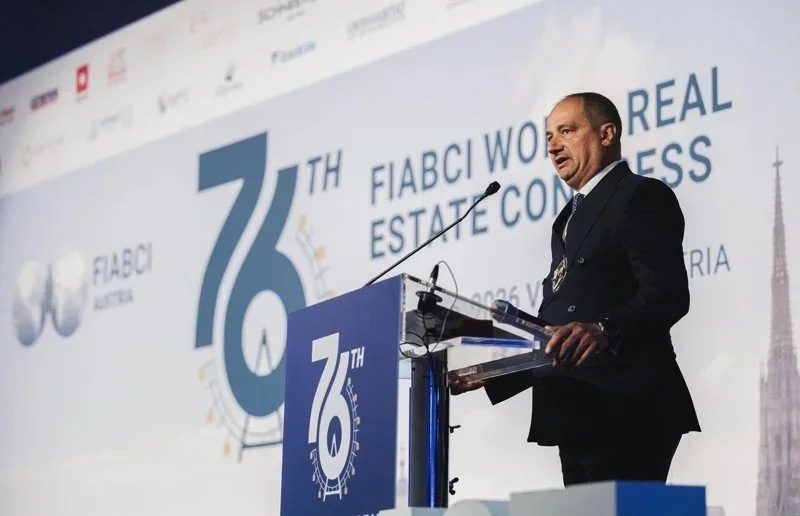
Current World President Antonio Campagnoli called on the global real estate industry to deepen transnational cooperation and practice sustainable transformation. (Photo provided by the industry)
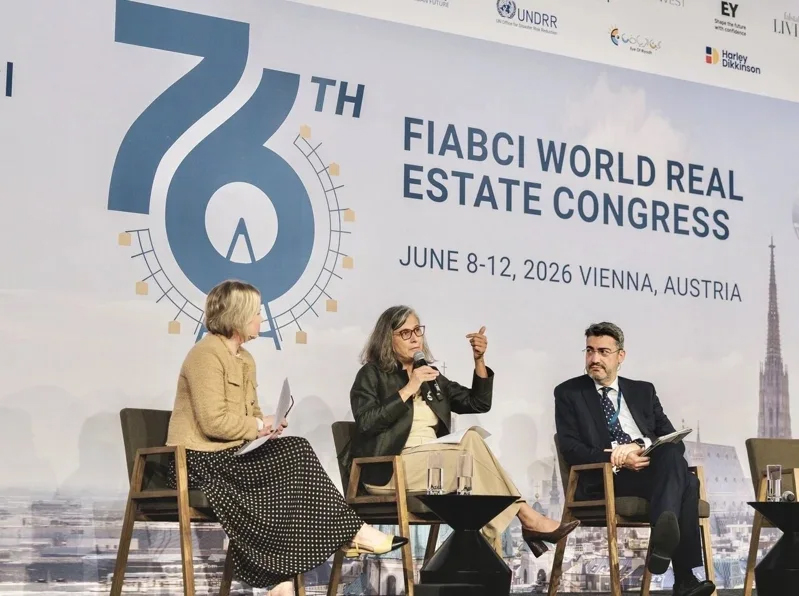
At the 76th FIABCI Annual Conference Forum, Anacláudia Rossbach (center), Executive Director of UN-Habitat, served as the keynote speaker. Photo/Provided by the industry.
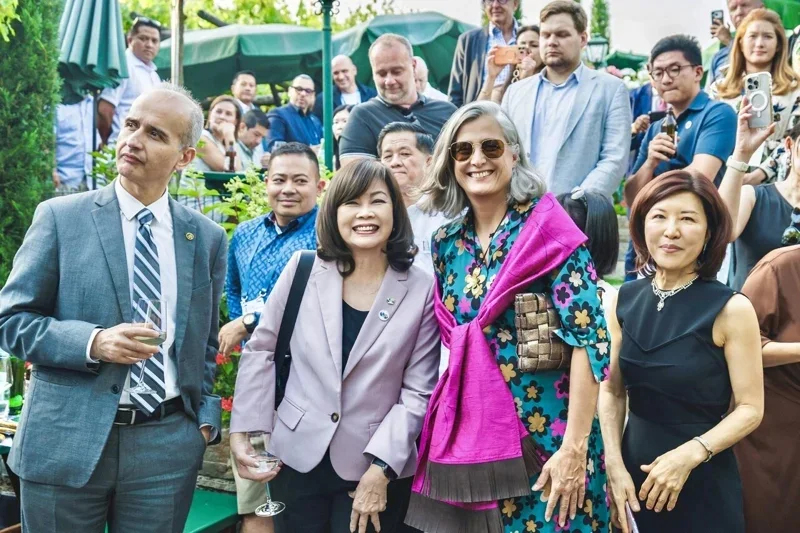
Anacláudia Rossbach (second from right), Executive Director of UN-Habitat, poses for a photo with Chang Lily (second from left), Chairperson of the Board. Photo provided by the company.
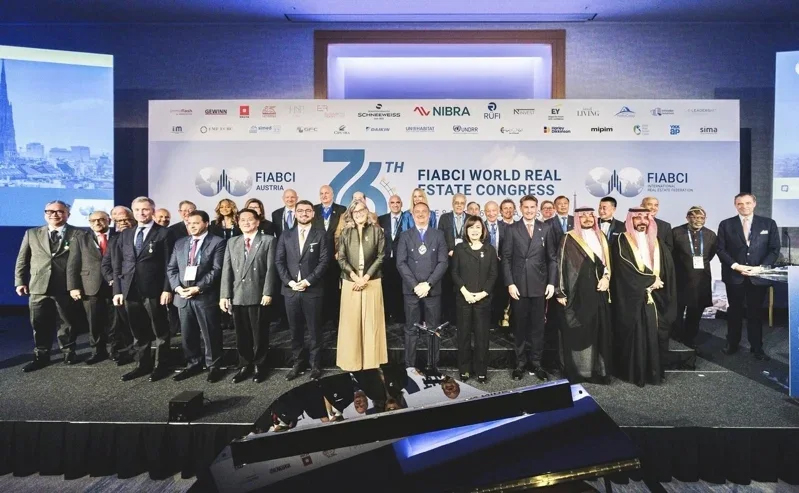
The 76th Annual Meeting of the Federation of Real Estate Associations Worldwide (FIABCI) was held in Vienna. Photo/Provided by the industry.