

Is there a solution to high housing prices? FIABCI World President Chang Lily: The government should work with the private sector to promote affordable housing
Lily Chang|Commercial Times / ZENG LI-FANG

Chang Lily (second from right), Presidentof Treasure Dragon Construction, officially assumed the position of World President on the 12th of this month, becoming the first Chinese woman to serve as World President in the 75-year history of FIABCI. (Photo/Zeng Li-Fang)
Chang Lily, Presidentof Treasure Dragon Construction, who recently took over as world president of the Federation of Real Estate Associations of the World (FIABCI), pointed out from an international perspective that "affordable housing" will be one of the most important issues in Taiwan's future housing policy.
She believes that if Taiwan wants to truly solve the problems of high housing prices and housing affordability, in addition to cracking down on property speculation and building social housing, it should also learn from international experience and work together with the government and the private sector to build an affordable housing supply system.
The Federation of Real Estate Associations of the World (FIABCI) is one of the world's most representative international real estate organizations, bringing together members from over 80 countries and more than 50 chapters. Chang Lily officially assumed the position of World President on the 12th of this month, becoming the first Chinese woman to hold this position in FIABCI's 75-year history, marking a new chapter in Taiwan's real estate industry.
At this handover ceremony, not only did Taichung Mayor Lu Shiow-Yen personally lead a delegation to offer her congratulations, but the Taiwanese real estate industry also demonstrated unprecedented cohesion, with more than 200 people from industry, government, and academia traveling over 9,000 kilometers and spending over NT$100 million on travel expenses to attend and support the "Pride of Taiwan"!
Industry leaders, including Lin Ting-Fang, Chairman of Chin-Mei Group; Lien Chih-Min, Chairman of Hua-Yu-Ning Group; Tang Kuo-Wei, third generation of Chong-Yu Elevator; Ke Chi-Yu, second generation of Shun-Tien Construction; Chiu Chung (Ji-Ji), General Manager of Feng-Yi Group; Lin Lung-Shen, Chairman of Ta-Yi Construction; Chang Chun-Hao, Chairman of Chin-Chia Construction; Li Chin-Chih, Chairman of Tai-Yu Construction; Hsieh Lin-Er, Chairman of Taichung City Real Estate Development Association; and Huang Peng-Hsiang, CEO of ERA Real Estate Taiwan, all personally attended the event.
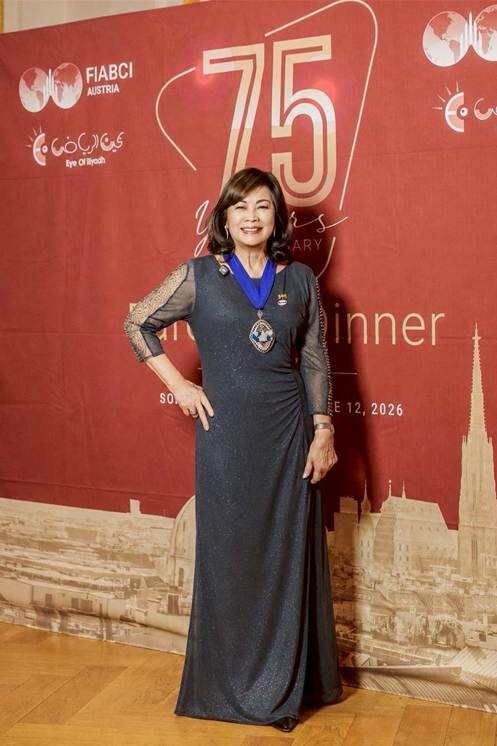
Chang Lily, Presidentof Treasure Dragon Construction, officially assumed the position of World President on the 12th of this month, becoming the first Chinese woman to serve as World President in the 75-year history of FIABCI. (Photo/Zeng Li-Fang)
Chang Lily acknowledged the heavy responsibility of becoming the first female Chinese woman to serve as the World President of FIABCI. She expressed her hope to use the FIABCI platform to bring back successful experiences in urban governance, housing policies, and sustainable development from around the world to Taiwan, while also showcasing Taiwan's strengths in building quality, community building, and urban development to the international community.
Speaking of housing policy, she pointed out that most housing problems in the country are still mainly solved by the government building social housing. However, in many countries, housing problems are not solely the responsibility of the government, but are jointly promoted through cooperation between the government and the private sector.
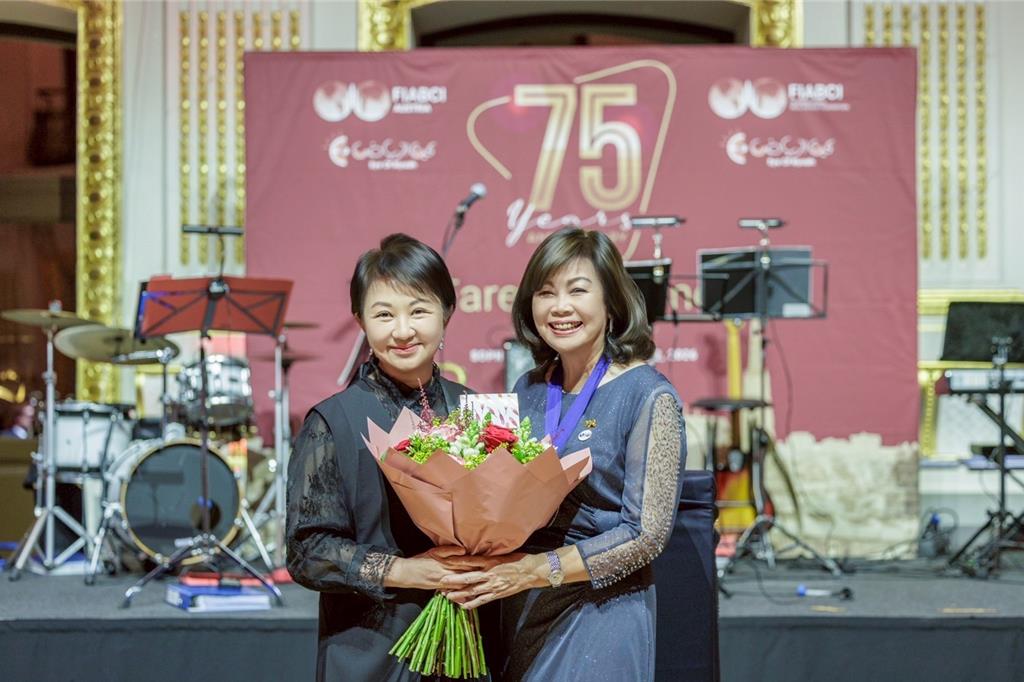
Taichung Mayor Lu Shiow-Yen (left) personally led a delegation to congratulate Chang Lily on assuming the position of World President. (Photo/Tseng Li-Fang)
Citing Indonesia and Brazil as examples, Chang Lily stated that Indonesia has long been actively promoting affordable housing policies; Brazil has large developers building hundreds of thousands of homes annually, using economies of scale and reasonable profit models to help address social housing needs. These successful cases are worthy of in-depth study and emulation by Taiwan.
She emphasized that affordable housing is not just about being able to "buy" it, but more importantly, being able to "maintain" it. Therefore, housing policies should not only focus on housing prices themselves, but should also take into account the overall cost of living, including factors such as housing prices, loan burdens, transportation costs, and living expenses, in order to truly improve people's quality of life.
Chang Lily stated that the government has limited land and resources, and relying solely on social housing supply will ultimately fail to meet the enormous housing demand. In contrast, encouraging private construction companies to enter the affordable housing market through institutional design and policy guidance will be more effective.
She pointed out that Taiwan has more than 10,000 construction companies. If more companies can participate in a large-scale and professional manner, it will not only help them operate sustainably, but also enable them to share the social responsibility of improving housing issues.
"A high housing market doesn't mean the government has no room for action," Chang Lily said. She pointed out that many countries, even with high housing prices, still manage to supply a stable amount of affordable housing each year through public-private partnerships (PPP). The key is not how many houses the government builds itself, but how to establish effective incentive mechanisms to encourage private sector participation.
For example, the government can reduce development costs and financial pressure by offering tax incentives, interest subsidies, financing assistance, or even establishing project funds or public-private partnership platforms, thereby attracting experienced developers to participate in the construction of affordable housing.
She pointed out that Taiwan has had similar cases in the past, including livable buildings and housing programs planned by some counties and cities for young people and disadvantaged groups, which have provided more reasonable housing products through price cap mechanisms.
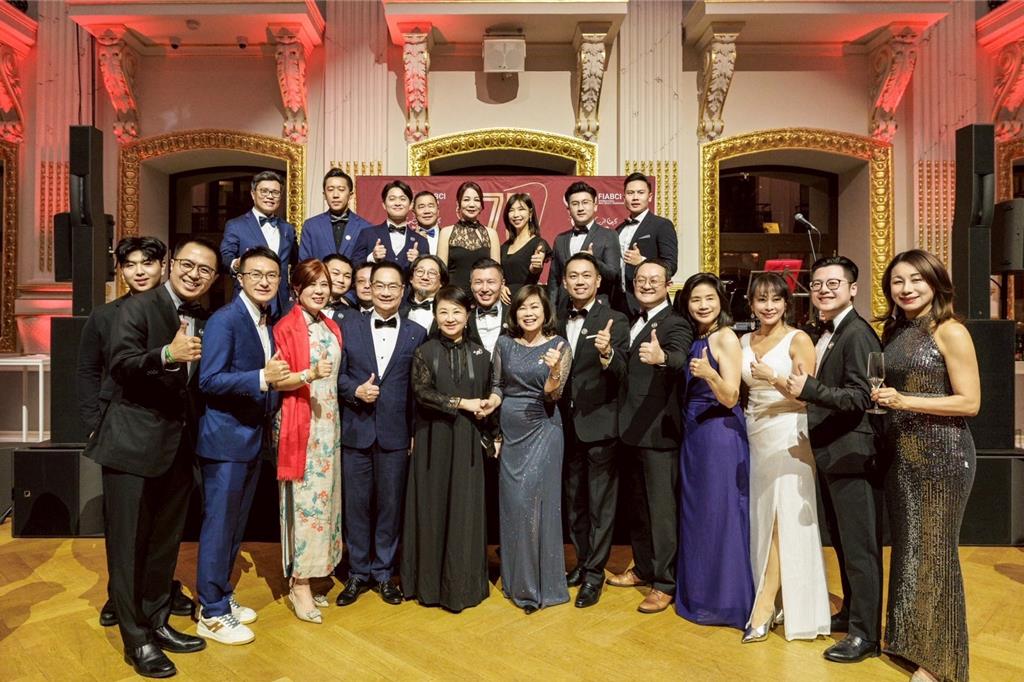
Taichung Mayor Lu Shiow-Yen personally led a delegation to congratulate Chang Lily on assuming the position of World President. (Photo/Tseng Li-Fang)