

The first Taiwanese to become FIABCI World President! Who is Chang Lily? How to solve the global housing problem?
Lily Chang|Vision Editorial Department
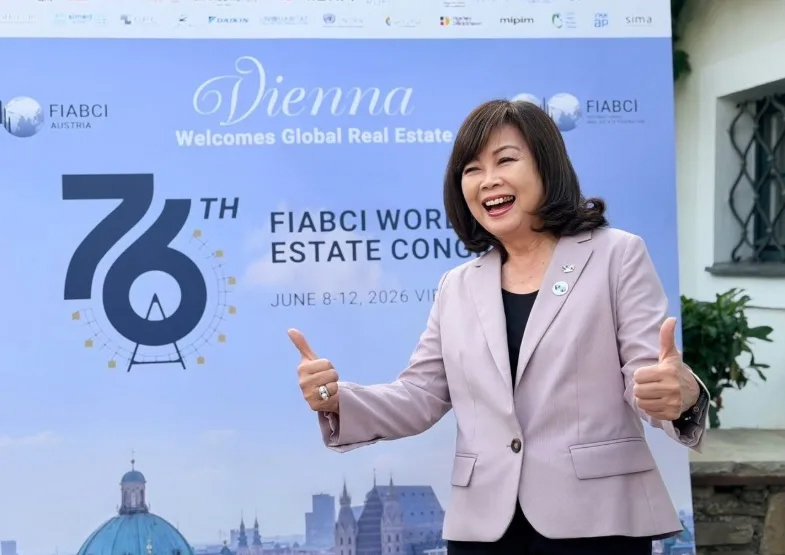
Chang Lily, president of Treasure Dragon Construction, was recently elected as the first FIABCI World President from Taiwan.
Chang Lily, president of Treasure Dragon Construction, was recently elected as the first FIABCI World President from Taiwan. What kind of organization is FIABCI? What contributions has Chang Lily made that led to her election? Will the appointment of the first Taiwanese World President enhance Taiwan's ability to address global housing market challenges such as housing shortages, public-private partnerships, and climate risks? With real estate no longer just a buying and selling issue, is Taiwan ready to embrace this transformation? Her inaugural appointment outlines core innovative concepts aimed at bringing about change.
In June of this year, the 76th World Congress of the Federation of Real Estate Associations Worldwide (FIABCI) was held in Vienna, Austria. Chang Lily, president of Treasure Dragon Construction, officially assumed the position of World President, becoming the first Taiwanese representative to lead this international real estate organization.
Who is Chang Lily? She has dedicated over 37 years to real estate development, construction, and urban development. She founded Longbao Construction in 1989 and currently serves as the chairperson of MJ Construction and GALERIE PIERRE art center. She previously served as the chairperson of the Taichung Real Estate Development Business Association and has long been involved in architectural aesthetics, cultural education, and charitable organizations. She was the director of the Taichung "Teacher Chang" Center and is also the founder and former chairperson of the Taiwan Mobile Bodhisattva Educational Assistance Association.
However, she did not suddenly rise to the position of world president. Chang Lily has served as the chairperson of the FIABCI Taiwan Chapter since 2020, and has subsequently served as the chairperson of the Developers and Investors Council, the chairperson of the Finance Committee, and the world vice president.
"The entire organization is eagerly anticipating Chang Lily's succession!" Matthias Gass, President of FIABCI Austria and host of this year's annual meeting, couldn't hide his excitement during an interview. He pointed out that Chang Lily has cultivated the FIABCI global community for many years, and her profound insights into the international real estate industry, as well as her long-term and significant contributions to the organization's development, have long earned her the unanimous respect of members worldwide. Especially at a time when the global real estate industry is entering a critical period of transformation, her leadership, international vision, and ability to build consensus are precisely the ideal and much-needed leadership qualities that FIABCI currently possesses.
On June 12, she officially took over as World President in Vienna, becoming the first Chinese female World President since the establishment of FIABCI.
What is this organization? FIABCI (International Federation of Real Estate Administrates de Biens et Conseils Immobiliers), founded in Paris, France in 1951, is an international platform for real estate industry exchange, with members encompassing professionals worldwide involved in the real estate sector. Therefore, the election of a Taiwanese as the first world president is undoubtedly a positive boost to Taiwan's international visibility.
Huang Chi-lun, Chairman of the Federation of Real Estate Associations of the Republic of China, also believes that Chang LilY's election as the FIABCI World President is not only an important personal achievement, but also a significant milestone for Taiwan's construction industry to move towards the international stage. Wang Chih-liang, Honorary Chairman of the Greater Taichung Real Estate and Construction Development Association, also affirmed her long-standing commitment to building quality, humanistic care, and sustainable values. Chang Lu-teng, Convenor of the Standing Supervisors of the Taiwan Provincial Real Estate and Construction Development Association, pointed out that this honor is not only Chang LilY's personal glory, but also the pride of all Taiwanese builders.
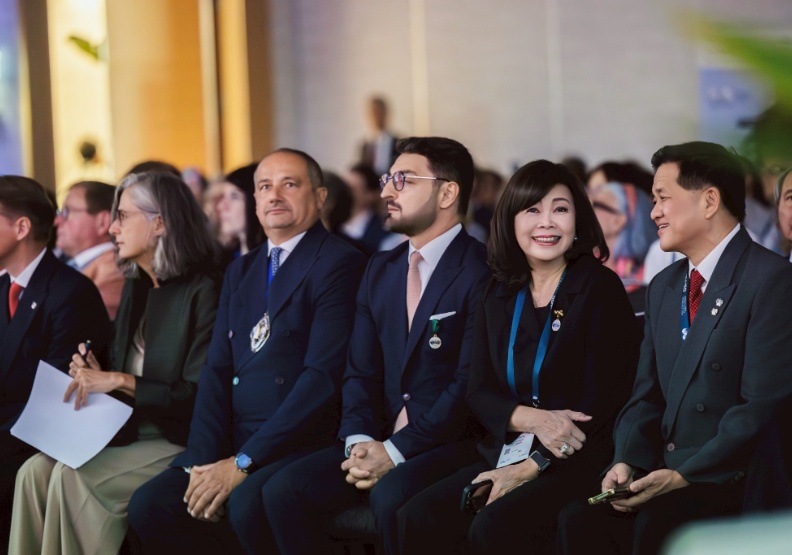
Treasure Dragon Construction president Chang Lily officially assumed the position of FIABCI World President, becoming the first Taiwanese leader to lead a major international real estate organization. She will promote international cooperation and sustainable urban development based on the philosophy of "Love & Sharing." (Provided by Treasure Dragon Construction)
How can "love and sharing" be put into practice? What does Chang Lily want to promote during her tenure?
She established "Love & Sharing" as the core philosophy during her tenure and proposed "Empowering Global Real Estate Companies" as the annual theme.
In addition, she also emphasized at the inauguration ceremony: In this era of rapid change, full of challenges and opportunities, the responsibilities of the real estate industry have gone far beyond development and investment itself. As an industry professional, you are not only building buildings, but also shaping the future of cities, improving people's living environment, and creating more resilient and sustainable communities for the next generation.
Does the presence of Taiwanese on the global real estate organization stage signal a transformation in Taiwan's housing market? Messages from the 2026 Vienna Annual Meeting suggest that global housing market discussions have moved beyond transaction volume and prices, shifting towards housing affordability, urban governance, climate resilience, and long-term investment. These issues are also increasingly impacting Taiwan. These can be summarized into three major international trends:
With 3.4 billion people worldwide living in unsafe housing conditions, the housing market cannot be discussed in isolation, not just in terms of prices
First, at the annual meeting, Anacláudia Rossbach, Executive Director of UN-Habitat, pointed out that according to UN-Habitat's World Cities Report 2026, approximately 3.4 billion people worldwide lack access to safe and adequate housing, with more than 1 billion living in informal settlements and slums. Providing sufficient and affordable housing by 2030 will require an annual investment of approximately US$3 trillion to US$4 trillion globally.
These figures reveal more than just that not enough houses have been built globally. The key factors in whether housing can truly meet demand include where it is built, whether ordinary families can afford it, and the availability of nearby transportation and public services.
Therefore, a seemingly prosperous housing market does not necessarily equate to an improvement in housing conditions. Rose Barth further points out that when large amounts of capital flow into the high-return real estate market, vulnerable and middle-class families may continue to be excluded. Real estate can be an investment commodity, but it also supports employment, family life, and the operation of the city; if these two functions are out of balance for a long time, the entire city will ultimately bear the cost.
Furthermore, looking at the past decade, real house prices in OECD countries have risen by an average of more than one-third, and globally, 44% of renting households have seen their rent payments exceed the 30% warning line for household income. This demonstrates that housing costs everywhere have undoubtedly become a heavy burden crushing many families.
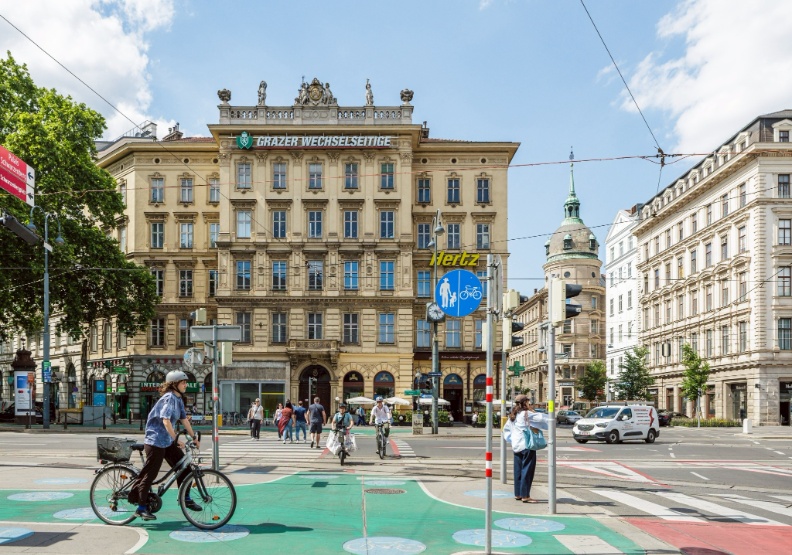
Vienna, renowned for its commitment to livable cities worldwide, is known for balancing housing equity, cultural preservation, and urban development. This year's FIABCI World Congress also featured a global dialogue on the future of housing. The image shows a street scene in Vienna, Austria. (Provided by Treasure Dragon Construction)
Developers build and leave? Residential development is moving towards long-term governance
Another key discussion at this year's FIABCI conference was how governments and the private sector can work together to address the housing crisis. The traditional public-private partnership model primarily involved cooperation between governments and businesses to drive construction; now, there is an international emphasis on the involvement of residents, communities, and policymakers from the early planning stages.
The reason is not complicated. Once a residential building is completed and handed over, it may be used for 30, 50 years, or even longer. If planning only considers construction costs and sales speed, ignoring transportation, public space, care needs, and community relations, projects completed in a short period of time may become long-term issues that the city must address.
The reason is not complicated. Once a residential building is completed and handed over, it may be used for 30, 50 years, or even longer. If planning only considers construction costs and sales speed, ignoring transportation, public space, care needs, and community relations, projects completed in a short period of time may become long-term issues that the city must address.
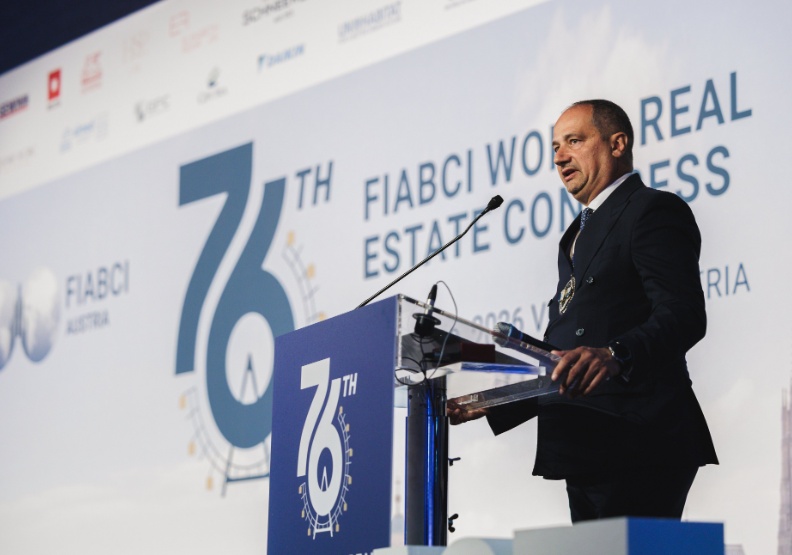
Antonio Campagnoli, the current FIABCI World President, emphasized in his speech that cooperation is the key to solving the global housing crisis. Provided by Treasure Dragon Construction
With extreme weather events approaching, house values will be recalculated
The third major trend is climate risk, with extreme weather events potentially upsetting the value of houses.
According to data from UN-Habitat, by 2040, 167 million homes worldwide may be lost due to climate change; the building and construction sector accounted for 37% of global energy and process-related CO2 emissions in 2023.
For the housing market, this is not just an environmental issue. When a house is exposed to flooding, heatwaves, or other disaster risks, insurance, loans, maintenance costs, and resale value can all be affected. How long can the book value of an asset that initially seems attractively priced remain if it cannot be insured, financed, or safely inhabited?
Similar situations are emerging in the United States, Canada, Australia, and parts of Europe: some homes threatened by climate risks are gradually becoming uninsurable assets; once they lose insurance, they lose the ability to obtain loans and financing, ultimately becoming "stranded assets."
Domestic housing is facing similar challenges
In light of the three major international trends, Taiwan is facing similar challenges. Domestic real estate developers have historically excelled at both building and selling houses. However, an aging population, shrinking family sizes, and widening development disparities across regions are making housing demand more complex. The future market may need more than just more construction projects; it may also require housing that can withstand aging, extreme weather, and the long-term operation of communities.
In addition, the high housing prices in metropolitan areas have already created a crowding-out effect on the middle class, with many young people complaining that they cannot afford to buy a house. These are all problems that must be faced.
As the future World President of FIABCI, Chang Lily will be responsible for promoting exchanges among global member states, formulating the organization's development direction, fostering international cooperation, and representing FIABCI in dialogues with international organizations such as UN-Habitat. Her influence will stem from cross-border industry exchanges and advocacy on key issues, and she is also expected to bring in more Taiwanese values. How she will leverage this momentum to lead a new trend in Taiwan will be a topic of great interest and anticipation.